

Klevgrand – TOMOFON Real Audio Synth
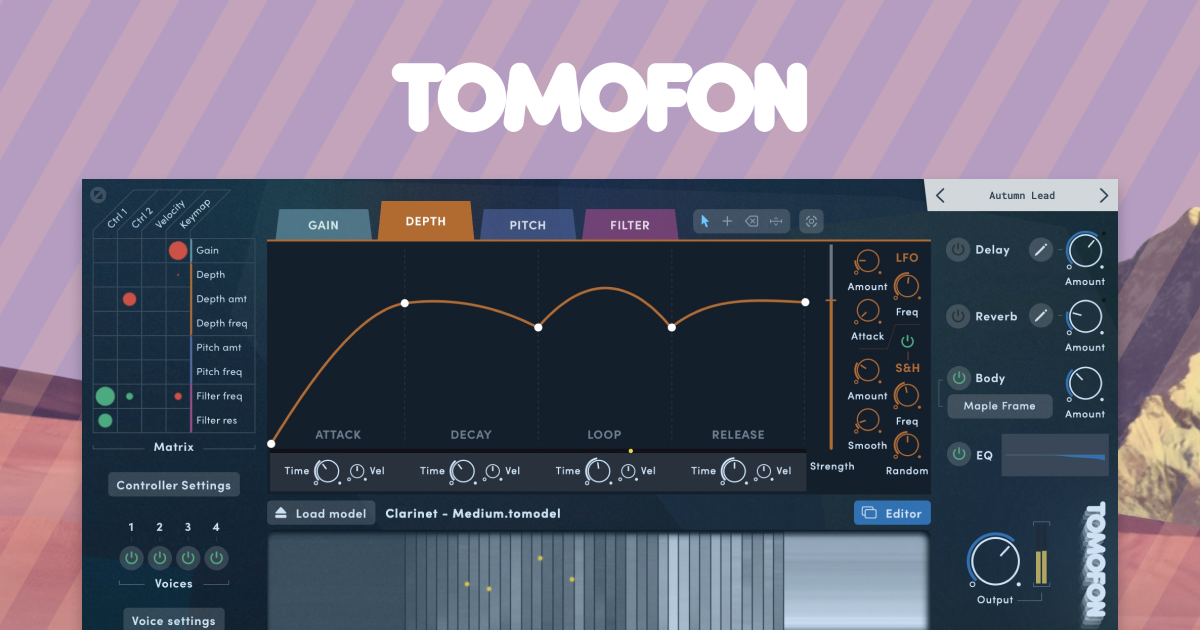
Klevgrand TOMOFON Real Audio Synth uses innovative Audio Model technology for expressive sample-based synthesis. Features MPE support, 124 Audio Models, custom import, and physical body simulations.
Original price was: $129.00.$64.50Current price is: $64.50.
Description
Klevgrand TOMOFON Real Audio Synth: Innovative Sample-Based Synthesis with Audio Model Technology
Traditional sample-based instruments often limit creative expression by treating samples as static recordings rather than flexible sound sources for synthesis. The Klevgrand TOMOFON Real Audio Synth reimagines sample-based synthesis through its innovative “Audio Model” format, which transforms audio files into comprehensive sets of oscillating waves organized across pitch zones. This approach creates instruments that are both deeply expressive and highly flexible, bridging the gap between realistic sampling and creative synthesis.
TOMOFON goes beyond conventional sampling by allowing continuous, seamless transitions between waves, layers, and zones within its Audio Models. The result is an instrument that feels alive and responsive rather than static and limited. With MPE (MIDI Polyphonic Expression) support, physical body simulations, and comprehensive sound design tools, TOMOFON provides a unique synthesis experience that encourages exploration and rewards experimentation.
🎹 What Makes TOMOFON Special
Audio Model Technology: Beyond Traditional Sampling
At the heart of TOMOFON is its innovative Audio Model format, which fundamentally rethinks how sampled sounds are organized and accessed. Instead of treating samples as static recordings mapped across a keyboard, TOMOFON converts audio files into comprehensive sets of oscillating waves. These waves are then allocated to different pitch zones, with each wave functioning as a distinct layer similar to how traditional samplers use different velocity zones.
The key innovation is the seamless, continuous transitions possible between waves, layers, and zones. As you play across the keyboard or apply modulation, TOMOFON smoothly interpolates between different waves rather than switching abruptly between samples. This creates instruments that feel organic and responsive, with timbral changes that evolve naturally rather than stepping between discrete samples. The result is sample-based synthesis that feels more like playing an instrument than triggering recordings.
Extensive Factory Library and Preset System
TOMOFON includes 124 high-quality Audio Models covering a wide range of instruments and sound sources. The library includes strings, vocals, brass, woodwinds, guitars, and various other acoustic and synthetic textures. Each Audio Model is crafted to maximize the expressive potential of the source material, with careful zoning and wave organization that makes the instruments playable and musical.
The 180+ factory presets demonstrate TOMOFON’s capabilities while providing immediate musical value. Presets range from realistic emulations of acoustic instruments to experimental textures and hybrid sounds that blend multiple source characteristics. Each preset serves as both a ready-to-use instrument and an educational example—by studying preset constructions, you can learn effective approaches to sound design within TOMOFON’s unique architecture.
Ready to Explore Innovative Synthesis?
Add Klevgrand TOMOFON Real Audio Synth to your instrument collection and experience Audio Model technology with MPE support
MPE Support and Expressive Performance
TOMOFON includes full MIDI Polyphonic Expression (MPE) support, allowing per-note control of parameters like pitch bend, pressure, and timbre when used with compatible controllers like Linnstrument, ROLI Seaboard, or Keith McMillen Soundplane. This expressive capability transforms TOMOFON from a static sound generator into a dynamic performance instrument where each note in a chord can have independent modulation and expression.
MPE integration works particularly well with TOMOFON’s Audio Model technology. As you apply pressure or slide on an MPE controller, the seamless transitions between waves create organic timbral changes that respond naturally to performance gestures. This combination of sophisticated sound generation and detailed performance control makes TOMOFON uniquely expressive among sample-based instruments.
Custom Audio Import and Model Creation
Beyond the factory content, TOMOFON allows you to create custom Audio Models from your own monophonic audio files. The import process includes both automatic and manual options. Automatic import provides a one-click process that analyzes your audio and creates a playable Audio Model instantly. Manual import gives you precise control over how waves are allocated to pitch zones, allowing customized organization that matches your creative vision.
This import capability extends TOMOFON’s usefulness beyond the factory library. You can create instruments from field recordings, vocal snippets, instrumental recordings, or any other monophonic audio source. The ability to share custom Audio Models with other TOMOFON users fosters community and collaboration, creating an ecosystem of unique sounds beyond what any single user could create alone.
Common Questions About TOMOFON
What exactly is an Audio Model and how does it differ from a sample?
An Audio Model is TOMOFON’s proprietary format that converts audio into organized sets of oscillating waves distributed across pitch zones. Unlike traditional samples that play back recordings, Audio Models allow continuous interpolation between waves, creating smooth timbral transitions across the keyboard and in response to modulation. This approach provides more expressive playability and fewer artifacts than conventional sample playback, especially for evolving or modulated sounds.
What are physical body simulations in version 1.2?
Physical body simulations add modeling of acoustic instrument bodies to the Audio Models, creating more realistic resonances and interactions. When enabled, these simulations affect how sounds respond to playing dynamics and modulation, adding characteristics like string resonance, body vibration, or air column modeling. This feature enhances the realism of acoustic instrument emulations and adds interesting characteristics to synthetic sounds.
What types of audio files can I import?
TOMOFON can import monophonic audio files in common formats (WAV, AIFF, etc.). The audio should be relatively clean and monophonic (single note or sound at a time) for best results. The import process analyzes the audio to extract individual waves and organize them by pitch. While designed for monophonic sources, some polyphonic material can work depending on the complexity and how clearly individual elements can be distinguished.
How does TOMOFON compare to traditional samplers or synthesizers?
TOMOFON occupies a unique space between sampling and synthesis. Like samplers, it uses recorded audio as source material. Like synthesizers, it provides comprehensive sound design controls and modulation. The Audio Model technology differentiates it from both—offering more expressive playability than static samplers and more organic sound quality than purely synthetic approaches. This hybrid position makes TOMOFON particularly valuable for creating sounds that are both realistic and flexible.
Comprehensive Sound Design Tools
TOMOFON includes extensive synthesis controls beyond its core Audio Model playback. Customizable envelopes with velocity control of envelope times allow detailed shaping of amplitude and other parameters. Multiple LFOs including Sample and Hold with randomness provide complex modulation possibilities. The modulation matrix features MIDI CC, velocity, and keymap controls for in-depth parameter modulation.
Advanced filters include various types (lowpass, highpass, bandpass) with 12 and 24 dB/oct options. Doubling voices (up to 4) with independent pitch, pan, and level controls create rich, layered sounds. Post-processing effects include Reverb, Delay, and EQ for final sound shaping. Playback modes include monophonic with adjustable glide and polyphonic legato that synchronizes envelopes across held notes.
Professional Features and Updates
Version 1.2 added significant features including custom tuning support via .tun files, allowing experimentation with alternative tunings and microtonal scales. The resizable interface (added in version 1.1) ensures comfortable use on different display sizes and resolutions. These professional features make TOMOFON suitable for diverse musical applications, from traditional composition with standard tuning to experimental work with alternative scales.
The plugin’s efficient design ensures good performance even with complex patches and multiple instances. The organized interface provides clear visual feedback about Audio Model structure, modulation routing, and parameter states, making sophisticated sound design manageable rather than overwhelming. This balance of depth and usability characterizes TOMOFON’s design philosophy.
Start Creating Unique Sounds Today
Join sound designers and producers who rely on TOMOFON for its innovative Audio Model technology and expressive capabilities
Creative Applications and Performance Use
TOMOFON finds application across musical production, sound design, and live performance. Music producers appreciate its ability to create expressive, organic sounds that stand out in mixes. Sound designers value the unique textures possible through Audio Model manipulation and custom import. Live performers benefit from the MPE support and responsive playability that makes TOMOFON feel like a real instrument rather than a static sound generator.
The instrument’s versatility allows adaptation to different musical styles. Classical and film composers use the realistic acoustic emulations. Electronic producers use the synthetic and processed sounds. Experimental artists explore the boundaries of what’s possible with custom Audio Models and extreme processing. This wide applicability ensures TOMOFON remains valuable as your musical interests evolve.
Educational Value for Sound Design
Beyond practical use, TOMOFON serves as an excellent educational tool for understanding sound design and synthesis concepts. The visual representation of Audio Models helps demystify how sampled sounds are organized and accessed. The modulation system with clear visual feedback teaches about parameter relationships and control. Studying the factory presets provides insight into professional sound design techniques.
The custom import feature encourages hands-on learning about sound organization. By creating your own Audio Models, you develop understanding of pitch zoning, wave organization, and how these structural decisions affect playability and sound quality. This practical experience deepens your overall sound design knowledge in ways that theoretical study alone cannot achieve.
Additional Resources and Community
To get the most from TOMOFON, explore the resources provided by Klevgrand and the user community. The company offers documentation and tutorials that explain Audio Model concepts and sound design approaches. Users share custom Audio Models and presets, creating a growing library of sounds beyond the factory content. The innovative nature of the instrument has fostered an active community of sound designers who enjoy sharing discoveries and techniques.
If you’re building a comprehensive virtual instrument collection, TOMOFON pairs well with other specialized tools. For more traditional synthesis approaches, check out our selection of synthesizer plugins, or explore dedicated effects processors for further sound shaping beyond TOMOFON’s included effects.
Whether you’re seeking an instrument that bridges sampling and synthesis, wanting to explore innovative Audio Model technology, or looking for expressive performance capabilities with MPE support, Klevgrand TOMOFON Real Audio Synth offers unique capabilities and creative potential. Its combination of innovative technology, extensive content, and professional features makes it more than just another virtual instrument—it’s a platform for sonic exploration that can expand your creative possibilities in distinctive ways.

Reviews
There are no reviews yet.